

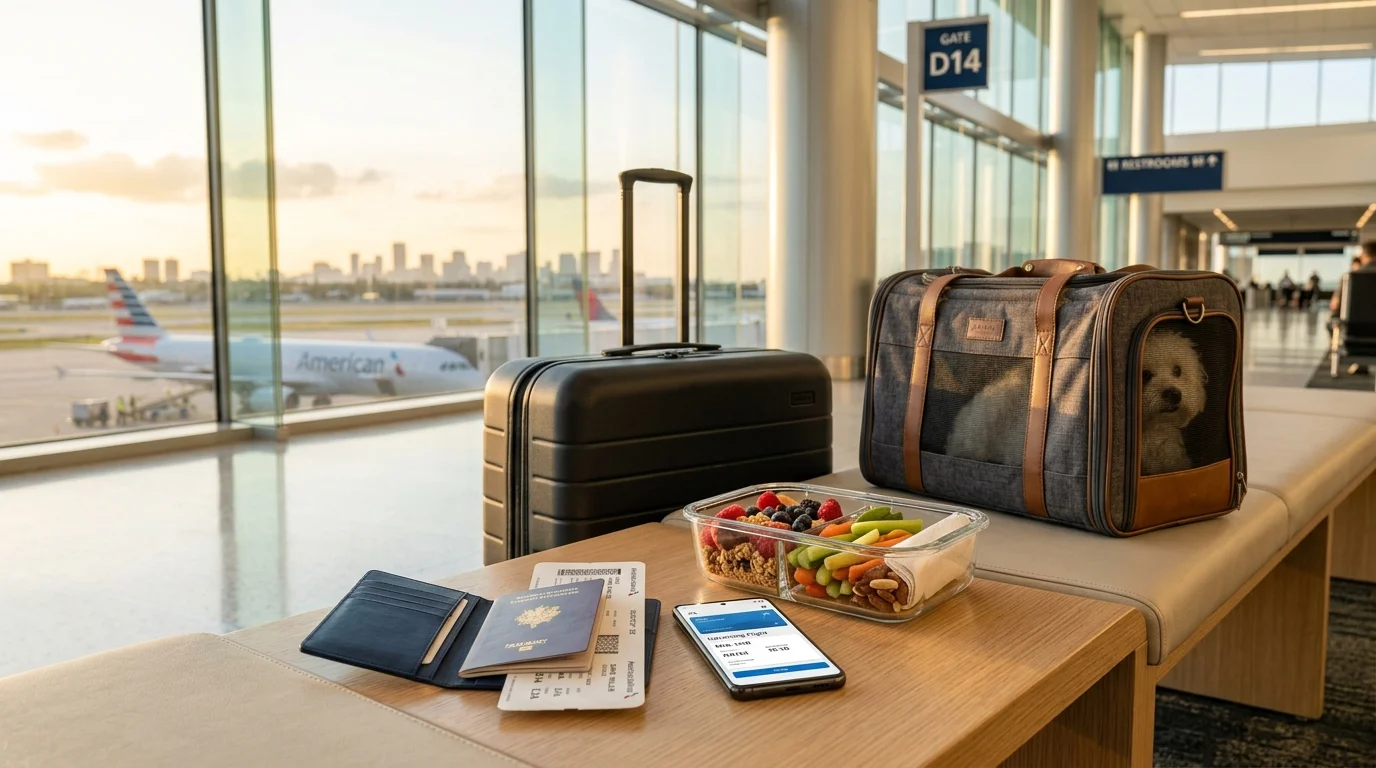
Let’s be honest: traveling is exciting, but arriving at the airport can sometimes feel like stepping into a dimension with rules no one ever explained. Between the fear of missing a connection, wondering if you can take a snack through security, or the dread of unexpected fees, every traveler needs to stay sharp.
To make sure you are never caught off guard on your next adventure, the Vuelitos team compiled these secrets, tips, and quick guides to turn you into a pro the next time you step into a terminal.
1. The "Distracted Traveler Fee": The Counter Check-in Trap
Did you know that walking up to the counter just to get your boarding pass printed can cost you big time? Nowadays, low-cost airlines across Europe and the Americas—like Vueling, Wizz Air, or Volotea—have a strict policy: in-person check-in incurs an extra fee.
If you check in digitally via their app or website (usually available 24 to 48 hours before departure), it is 100% free. However, if you arrive at the airport and ask the agent to do it for you, you could be charged fees exceeding $30 or $40. It is essentially a fee for using their staff's time! So, make sure you have your digital QR code or printed pass ready before leaving home.
2. Short Layovers: What Does a "Protected Itinerary" Mean?
Has this happened to you? You buy a ticket from Caracas to Madrid with a layover in Bogotá, but notice you only have an hour to switch planes. Panic sets in: "Will I have enough time to collect my bags and check in again?" Don't worry—this is where the magic of a protected itinerary comes in.
- A single booking code (PNR): If you bought the entire route together under one reservation, your flight is protected.
- Checked bags transfer automatically: You don't need to pick up your luggage during the layover; the airline transfers it directly to your final destination.
- Airline responsibility: If the first flight is delayed and you miss your connection, the airline is obligated to rebook you on the next available flight at no extra cost.
3. Pets on Board: A Practical Guide to Traveling with Your Companion
Traveling with our four-legged companions is increasingly common, but it requires preparation. You can't just show up with a carrier and board.
For example, if you want to bring a cat or a small dog in the cabin, they must fit in a soft-sided carrier under the seat in front of you. Additionally, pet slots per flight are extremely limited (sometimes only 3 or 4 per aircraft). If you don't reserve their spot weeks in advance, you might be left behind. Don't forget that an international health certificate and up-to-date vaccinations act as their passport.
4. Food at the Airport: What You Can Bring, Eat, and Pack
There are many doubts regarding what food is allowed and where you can consume it. Here are the core rules:
- In carry-on baggage: Solid foods are permitted through security screening (sandwiches, whole fruit, nuts, or biscuits). Liquids, gels, or spreads over 100 ml (3.4 oz), such as soups, yogurt, or sauces, remain strictly prohibited at checkpoint controls.
- Eating in the waiting lounge: Yes, absolutely! Once past security screening, you can freely eat snacks brought from home or food purchased at airport shops while waiting at the gate.
- In checked luggage: Be cautious with perishable goods. On international flights, destination customs authorities prohibit raw meats, cured sausages, or fresh agricultural produce. Even if checked in by the airline, customs officers will confiscate these items upon arrival and may issue fines.
5. The 4-Hour Rule: Airport Arrival and Self-Managed Layovers
Arriving 4 hours early for an international flight is essential: between security checkpoints, immigration lines, and document verification, time moves quickly, and preventing delays protects an expensive ticket.
This rule becomes even more critical if you booked separate tickets independently for a self-managed layover (unprotected connection). When connecting across separate reservations or airlines, maintain a minimum 4-hour window between flights. This window is necessary because you must retrieve checked baggage, check in at the new airline counter, and clear security again. If the initial flight suffers delays and causes a missed connection, the second airline bears no liability and the ticket value is lost.
Traveling informed is traveling stress-free. Have questions about your next route or need help with your check-in? The Vuelitos team has got your back.
